To better prepare interaction design- and web development students for working life, 3rd year students take part in an internship as a part of their education. Internship preparation consists of fairly easy and straight forward tasks, but they have to be repeated every year and takes up a lot of time.
In order to reduce the administrative work, NTNU set out to develop an online platform. NTNU BeNet makes it easy to match and administer student internships. When students and companies register directly on BeNet, both parties can easily manage their contact information, provide information about themselves and follow up with prospective matches.
I worked as a solo designer during the fall semester in 2021 together with the professor, who acted as a project manager. My tasks were to map out the partner companies’ experience during the internship process and come up with an initial design. Throughout the process I participated in meetings with Kodeo; the external company hired to develop the platform.
IDG3541 - Designpraksis i bedrift is a course that intends to give students a taste of a real work environment. During the course students are going to go through an application process where they create a resume, application letter and a portfolio that is sent out to prospective companies. These companies can either be sourced by the students themselves or picked from the existing NTNU network.
The professor acted as a middleman between the companies and the students. Communication between the two sides would primarily be based on email and resulted in a lot of back and forth. After students applied to various companies within the network, the professor would need to manually match the student and company together to the best of their ability.
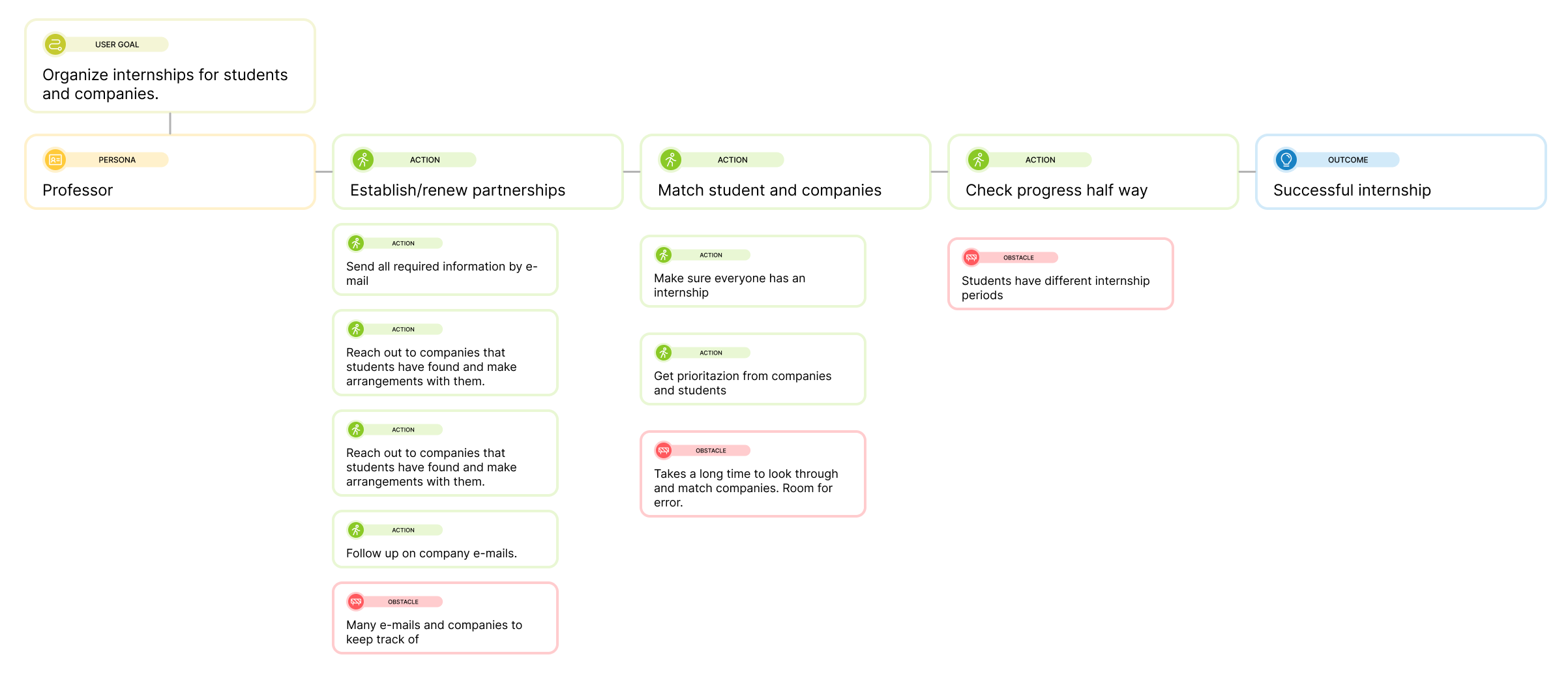
Due to communication primarily being through email, it was hard to keep an overview of practical information and important dates. The companies also experienced confusion regarding where they were in the process and when they were supposed to do certain tasks.
User Goal: We wanted to gather all information related to the internships in one place, simultaneously making it clearer for the company where they were in the process and what was expected of them in each step.
Business Goal: We wanted to reduce the administrative workload for the professor and make it easier to keep track of the status, both for the companies and the students.
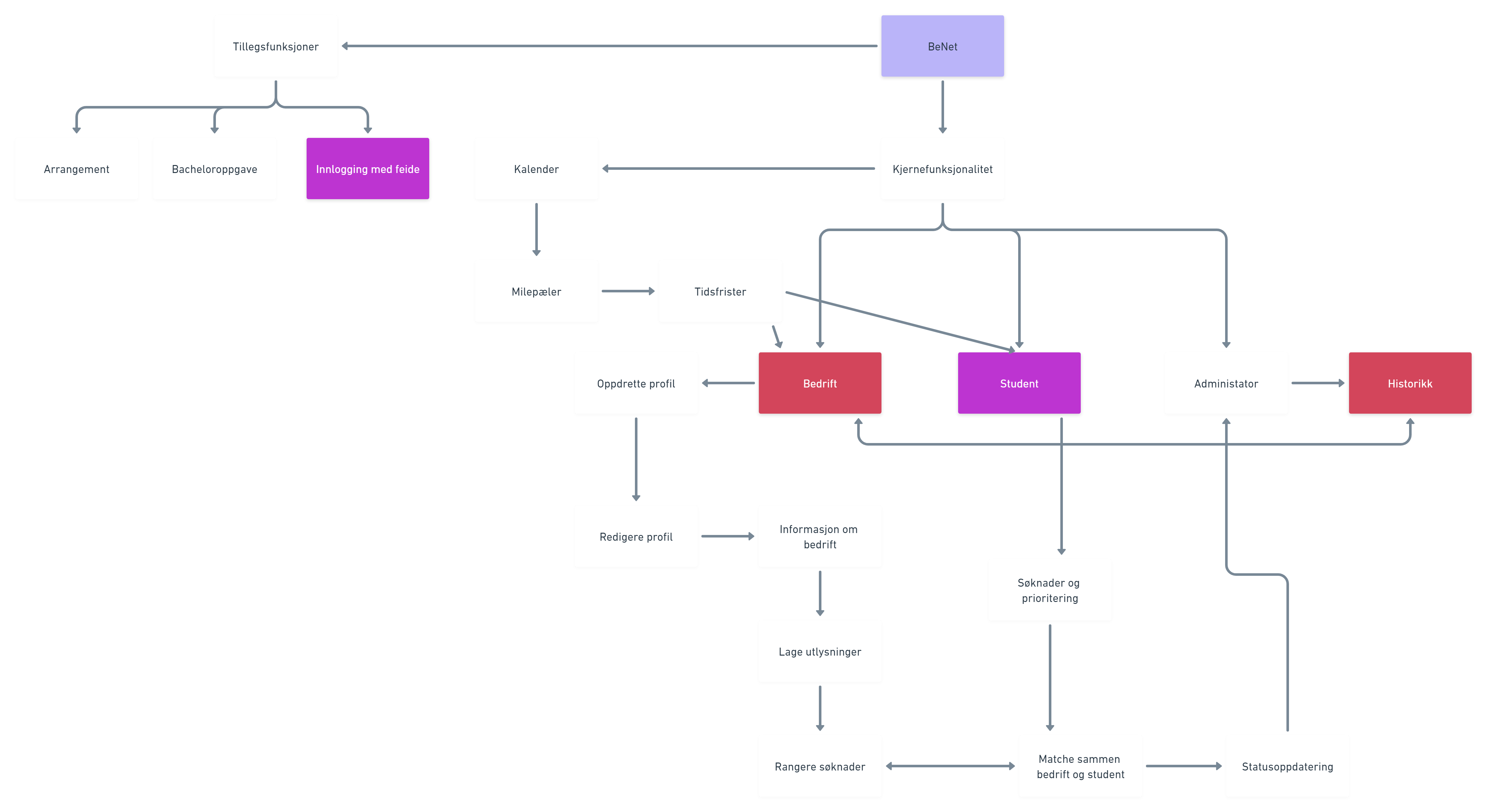
As BeNet was based on a previous bachelor thesis, there was already a lot of pre-existing work. I mapped out the core functionality of BeNet and included a task flow for the three user groups: students, companies and administrators.
The thesis had insights about student- and administrative user needs, but lacked research about companies. To better understand company users, I conducted semi-structured interviews with 6 different companies who had internship students the year prior. The goal of the interviews was to gather insight and provide an understanding within three key areas:
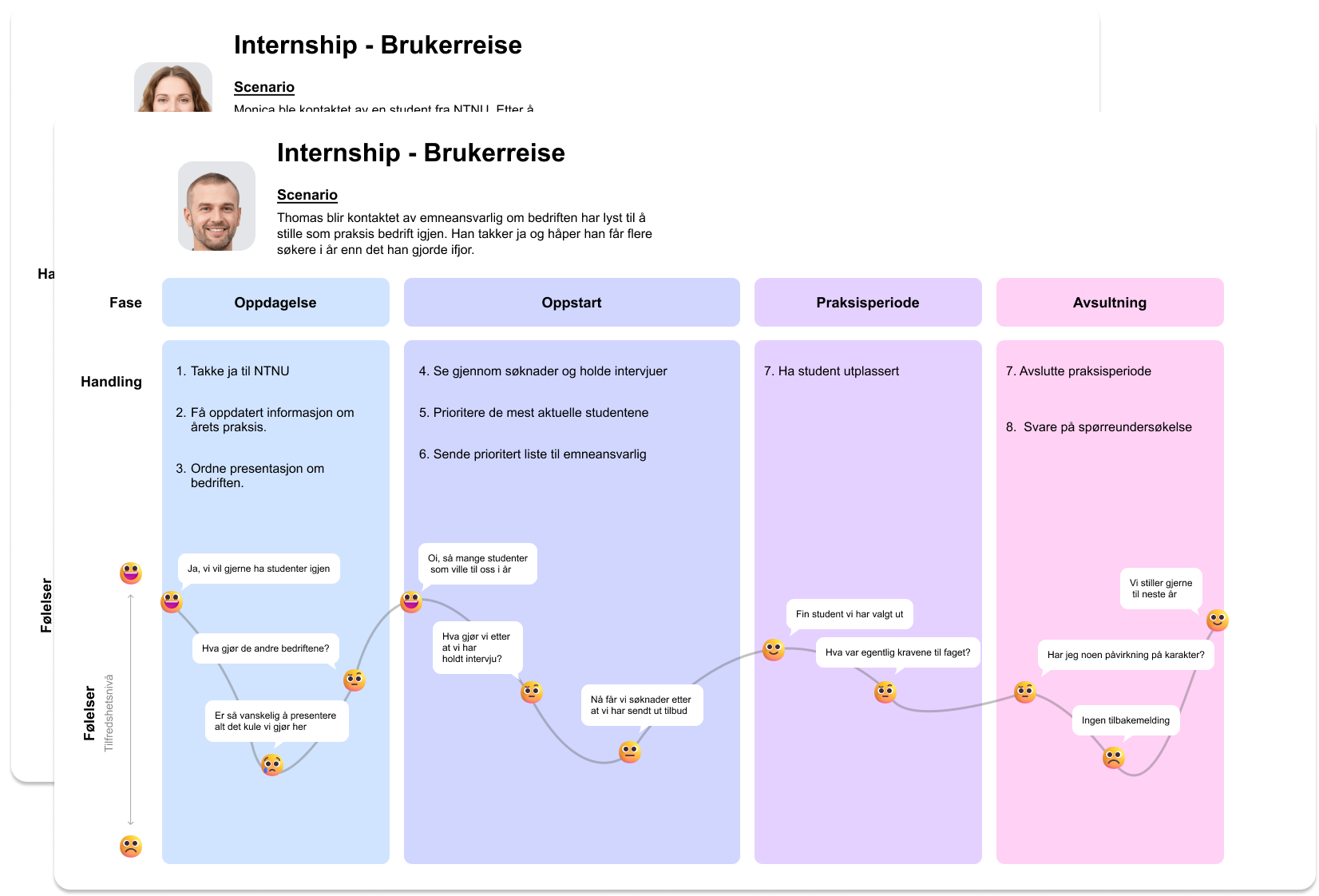
Under the interviews, the interviewees were tasked with mapping out their own user journeys and thoughts surrounding the internship experience and collaboration with NTNU. This task helped uncover important insights as to when and where problems occurred.
Each interview was recorded, transcribed and then analyzed through thematic analysis. This made it easier to locate and compare similarities, needs and pain points for the various companies.
Companies have little to no guidelines to follow and expressed feeling confused around how to arrange the internship period and what kind of expectations NTNU had for the company.
While navigating back to the same e-mail is not especially hard, most people find it troublesome. Especially when information gets separated into different mail threads.
It is no secret that terms like interaction design and UX has become a bit of an umbrella term. Some companies admitted that they are unsure of what would be relevant tasks and what the students had learned before.
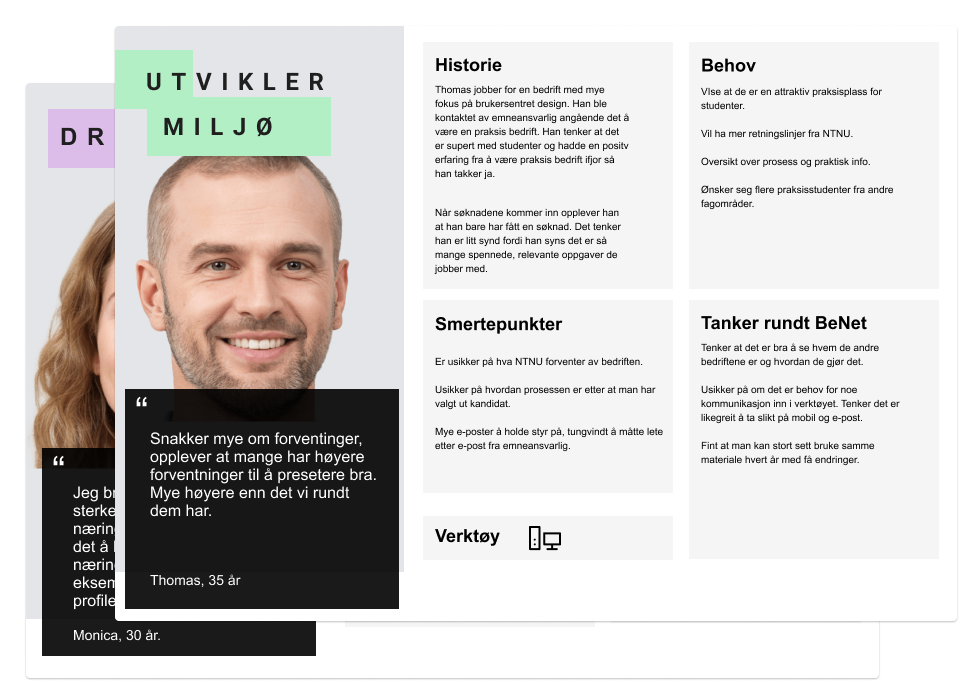
Raw data from the thematic analysis ended up being 7 pages long, therefore it was necessary to condense the gathered insight into something more personable and relatable. I choose to turn it into 2 personas that represented companies with different corporate cultures and needs.
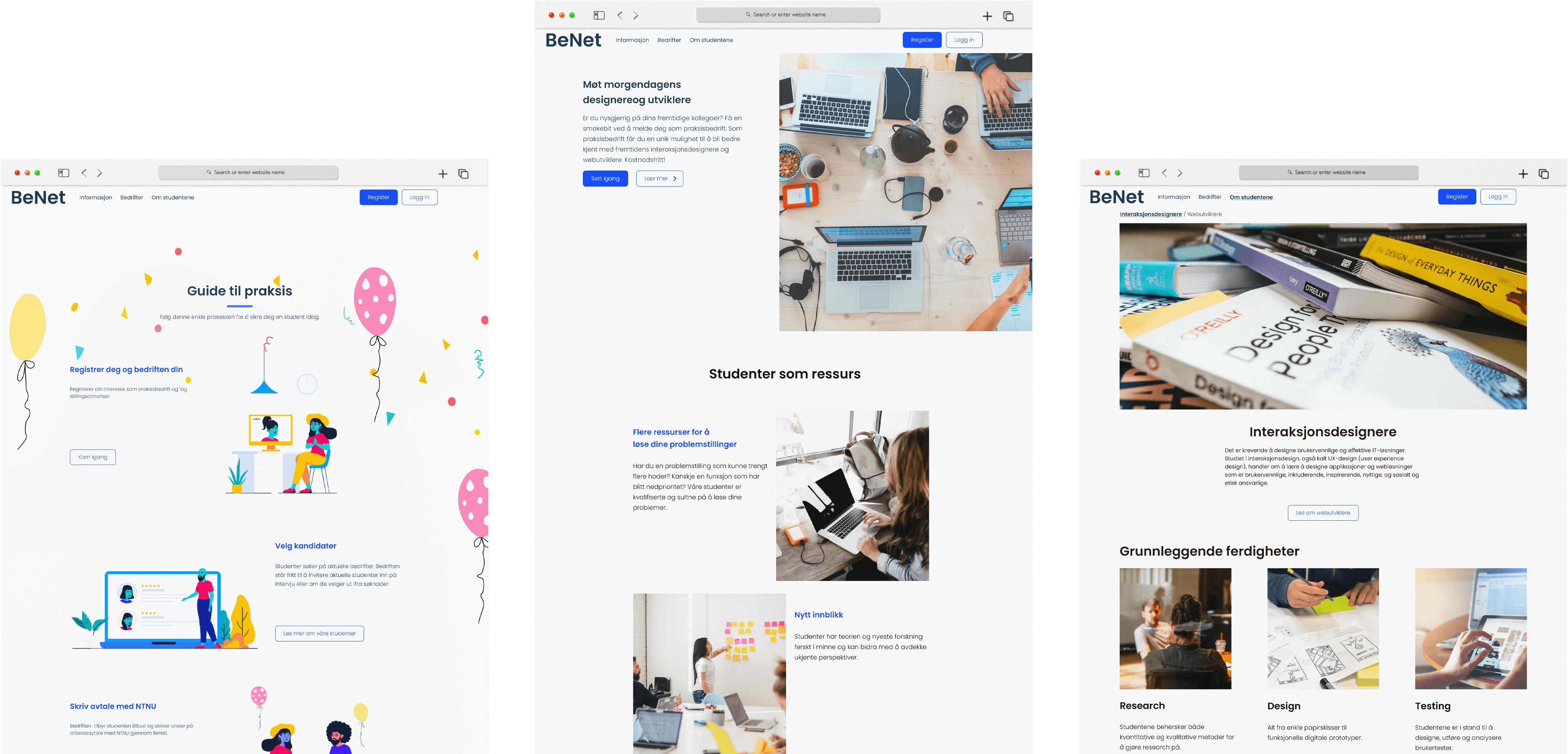
After the research I started working on a design to visualize how the identified pain points could be addressed through the BeNet portal.
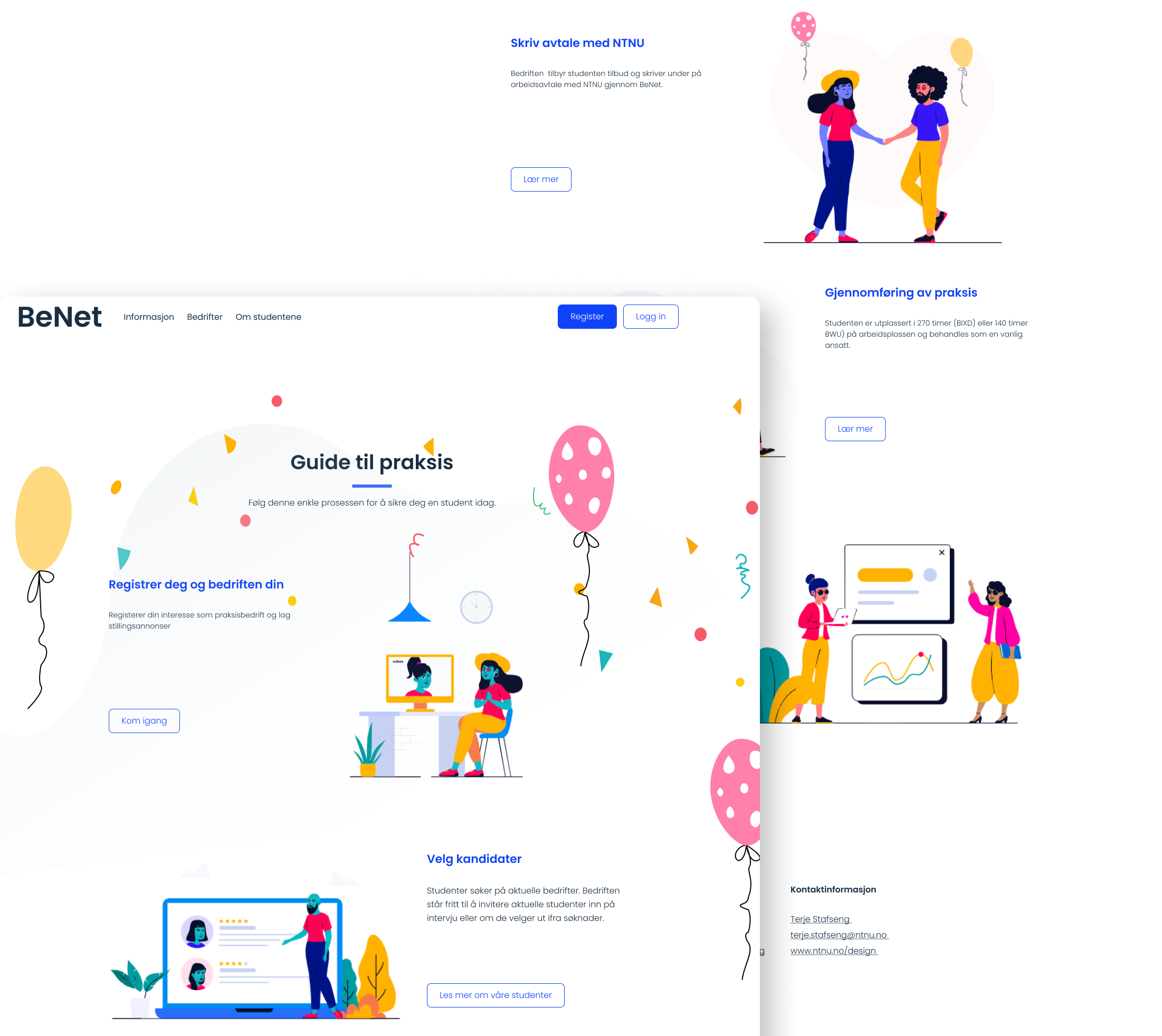
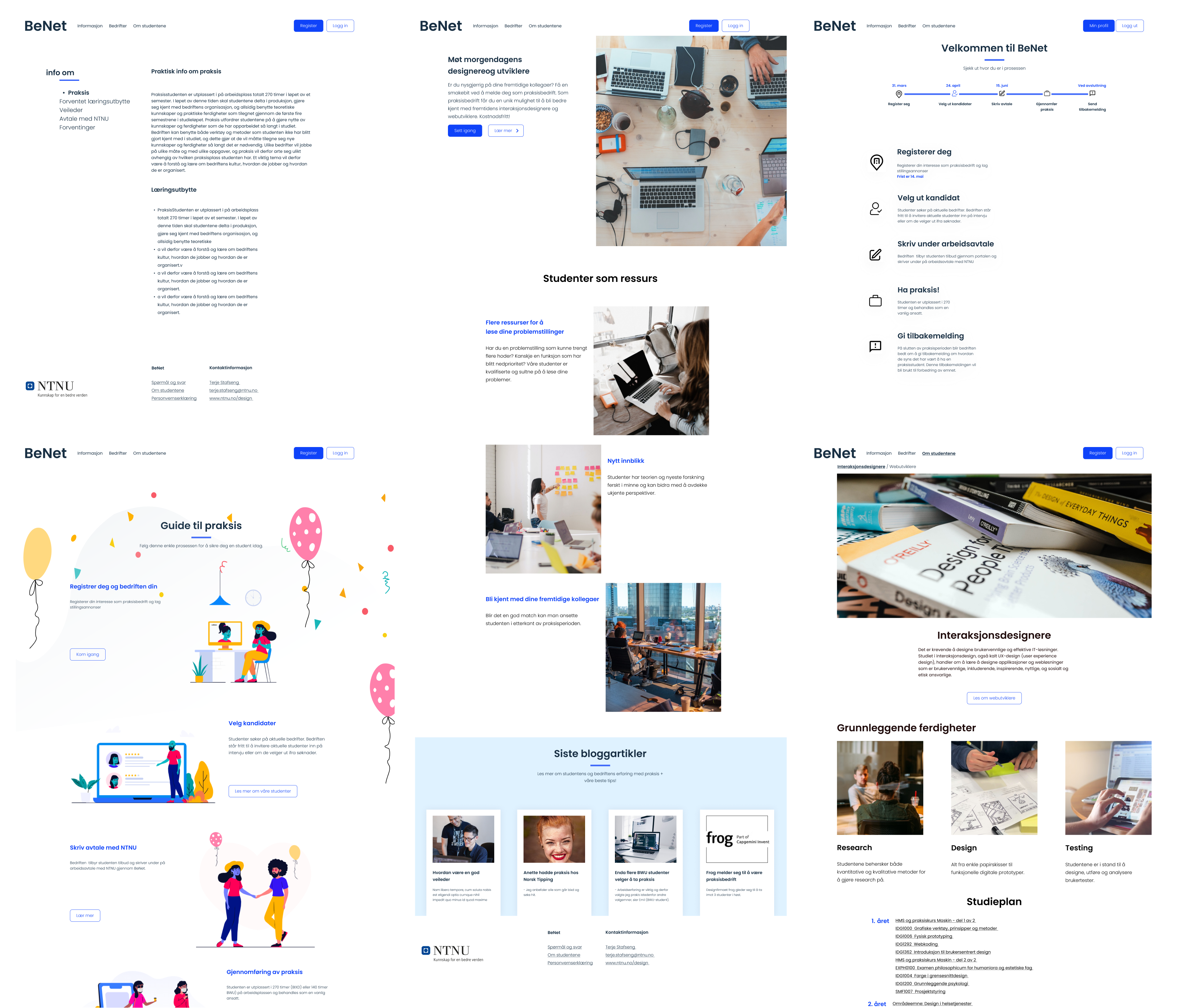
In order to reduce confusion regarding the next steps in the recruitment process, I made a guide that companies can refer back to. For each step there is a button that will guide the user to the appropriate action, i.e. create an user or learn more.
To make it easier for companies to set up a good internship period, a page highlighting important skills within interaction design and the current student's curriculum could be beneficial.
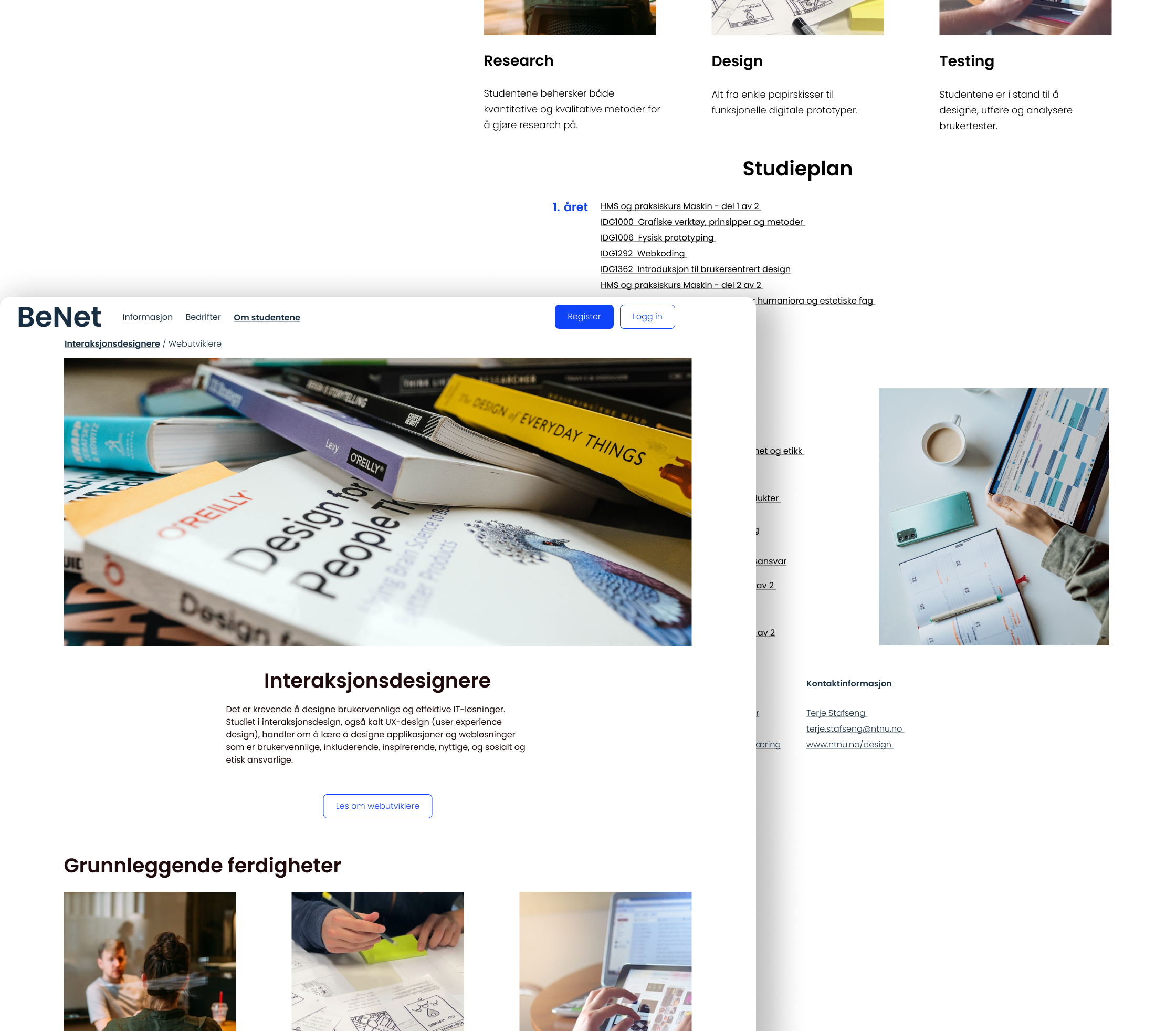
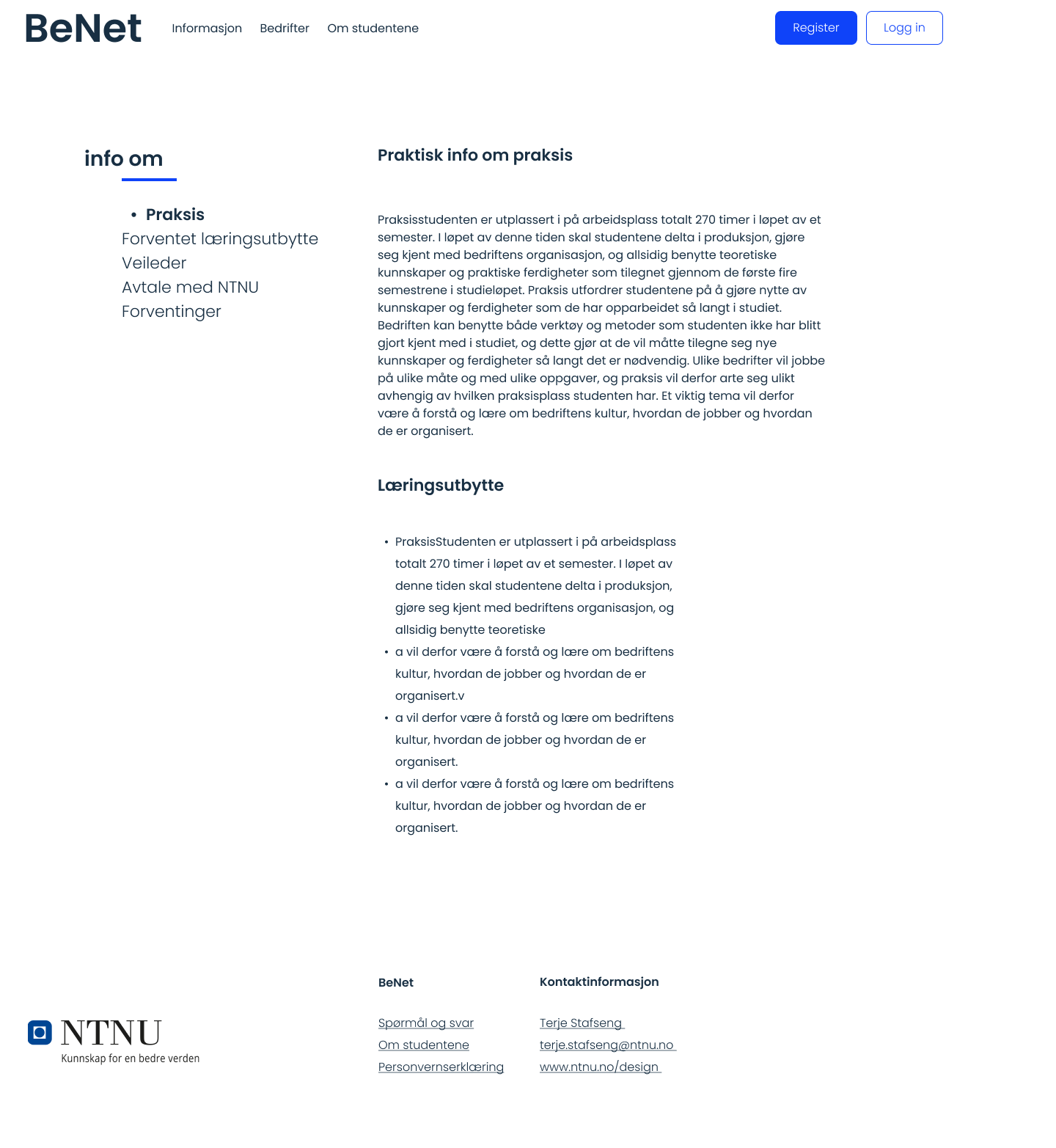
By gathering all relevant information regarding internships in one place, we aim to make it easier for companies to get a more holistic overview of what internships entails.
After the research I started working on a design to visualize how the identified pain points could be addressed. The aim was to show how different types of information could be displayed. From previous experiences, I find that it is easier to see the bigger picture when working with high fidelity designs compared to picking the best option between low fidelity sketches.
Due to time-, resource constraints and miscommunication, my time on the project was over before it was fully developed. If I were to continue working on it, I would have liked to design more functions. In hindsight I realize that I became very laser focused on the user group I was tasked with and I think it would be more beneficial to take a step back and look at it more holistically.


